Every November, Cambridge Dictionary picks one word that best captures the year in the English language. For 2025, that word is “parasocial” — and if you’re learning English (especially for IELTS), it’s worth five minutes of your time, because it’s exactly the kind of modern, real-world vocabulary examiners like to hear you use naturally.
What actually happened
On 18 November 2025, Cambridge Dictionary announced parasocial as its official Word of the Year. It beat out other newly added words like slop (low-quality, mass-produced AI content), tradwife (a woman who publicly embraces a traditional homemaker role, often on social media), and two words you’ve probably already seen on TikTok: skibidi and delulu.
Cambridge lexicographer Colin McIntosh explained the choice by pointing to something bigger than one trending word: “internet culture is changing the English language”, and 2025 was the year that became impossible to ignore.
The idea behind the word
Cambridge Dictionary defines parasocial as: “involving or relating to a connection that someone feels between themselves and a famous person they do not know.”
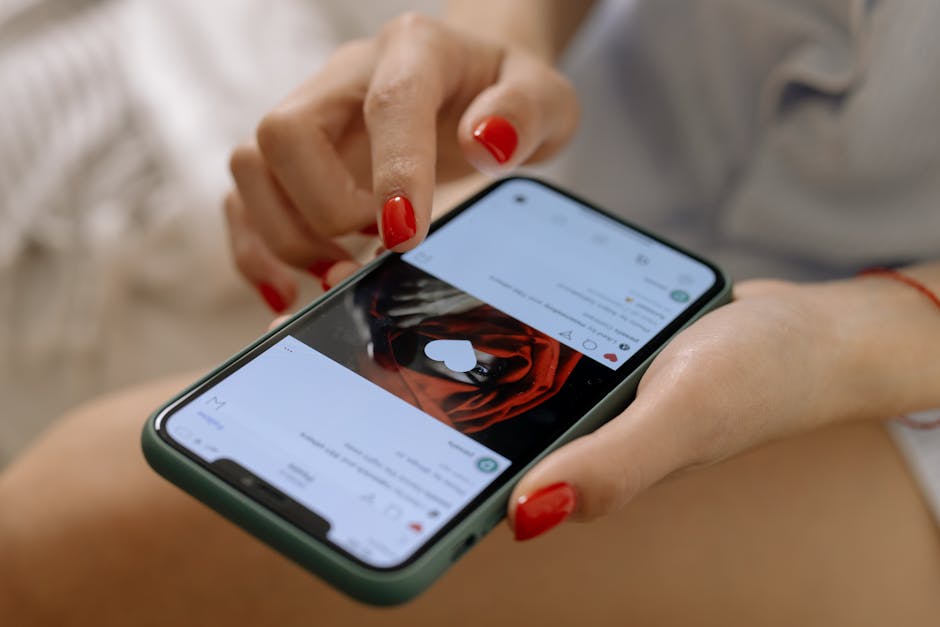
Think about it this way: you watch the same YouTuber every day. You feel like you know them — their humour, their opinions, even their dog’s name. But they have never met you, and don’t know you exist. That one-sided feeling of closeness is a parasocial relationship.
The term isn’t actually new — it was coined all the way back in 1956 by two University of Chicago sociologists studying how television viewers formed emotional bonds with the personalities on their screens. What’s new is the scale: with influencers, streamers, and now AI chatbots available to “talk to” 24/7, parasocial connections have gone from an occasional side-effect of watching TV to a daily part of millions of people’s emotional lives.
The language breakdown — vocabulary you can actually use
Here’s the useful part. These aren’t just “trendy” words — several of them are genuinely good vocabulary for describing modern life, relationships, and technology in IELTS Speaking Parts 2 and 3.
- parasocial (adjective) — describing a one-sided emotional connection. “A lot of teenagers have parasocial relationships with streamers they’ve never met.”
- parasocial relationship / parasocial bond (noun phrase) — the connection itself. “Her parasocial bond with the podcast host felt as real as a friendship.”
- one-sided (adjective) — only one person is really involved or invested. Useful outside this topic too: “The conversation felt completely one-sided.”
- public figure (noun phrase) — a person known to a large audience (celebrity, influencer, politician). Safer and more precise than just saying “famous person” in a Band 7+ answer.
- to form an attachment to something/someone — a more formal, natural-sounding way to say “start to feel connected to.” “Many viewers form an attachment to characters in long-running shows.”
- curated (adjective) — carefully selected and presented, often used about the polished version of someone’s life shown online. “Influencers only show a curated version of their day.”
- slop (informal noun, also added this year) — low-quality content made quickly and carelessly, often by AI, and posted in huge volume.
Notice the pattern: form an attachment to, a one-sided connection, and a curated persona are all things a Band 7+ candidate can say instead of the much simpler (and much more common) “she feels close to him” — same idea, noticeably higher-level language.
The real technique: using trending vocabulary in IELTS Speaking
This is where a lot of candidates get it backwards. You don’t need slang like “delulu” in your IELTS test — but you absolutely can use precise, current vocabulary like parasocial, one-sided, and public figure when a Part 2 or Part 3 question touches on media, celebrities, or technology, which happens more often than most candidates expect.
Try this out loud. It’s a realistic Part 3 question:
“Do you think it’s healthy for people to feel emotionally connected to celebrities or influencers they’ve never met?”
A stronger sample answer opening, using this week’s vocabulary correctly:
“I think it depends on the degree. It’s completely normal to admire a public figure or follow their work closely — but when that turns into a genuinely one-sided parasocial attachment, where someone feels like they truly know a celebrity personally, that’s when it can become unhealthy, because the relationship isn’t reciprocated at all.”
That’s a Band 7+ structure — direct opinion, precise vocabulary, a clear cause-and-effect (“when that turns into… that’s when…”) — built entirely around one piece of real, current, dictionary-verified vocabulary. For the exact structure behind answers like this, see our guide on structuring a 2-minute cue card answer, and for the vocabulary-upgrade habit itself, why memorising generic IELTS phrases doesn’t work — using real, current words like this is exactly the alternative.
Try it yourself
Want to see how your own spoken English actually sounds when you try to use vocabulary like this live, under time pressure — not just read it? Take the free IELTS Speaking self-assessment on ActuallySpeak and find your real current band — including how naturally your vocabulary is coming across.
And if you want the full breakdown of what actually separates a Band 6 from a Band 7 speaking score, our IELTS Speaking Band Descriptors guide is the place to start.
Want more free help like this? Join Matthew’s free Smooth English community for weekly live practice, feedback, and support: Join the free Skool community →
Related reading:
IELTS Speaking Band Descriptors Explained · Why Memorizing IELTS Speaking Phrases Doesn’t Work · Structuring a 2-Minute Cue Card Answer · Read the ActuallySpeak companion guide
Sources: Gulf News, NPR, Cambridge Dictionary Blog.