Your child can recognise the word, spell it, and get full marks on a vocabulary test — and still freeze completely when asked to say a sentence out loud. That gap has a name, and most apps are built in a way that never actually closes it.
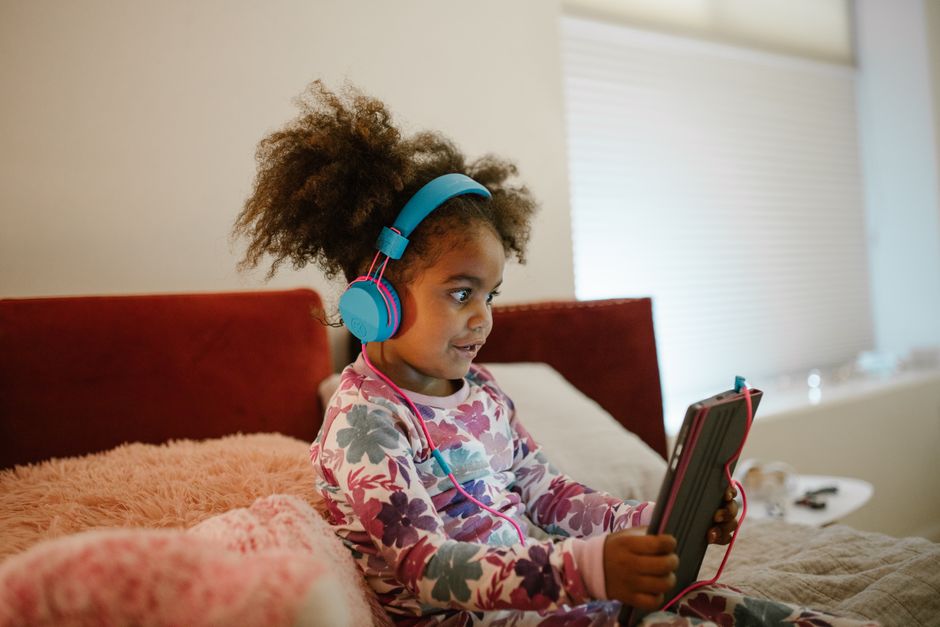
“Silent knowledge” is real, and it’s the default outcome of most apps
Most children’s English apps are built around recognition: tap the picture that matches the word, choose the correct spelling, match the pair. Children get very good at these games — and very good at recognition tests — while the actual skill parents care about, speaking out loud with confidence, never gets practised at all. It’s entirely possible to “pass” a recognition-based app for months and still freeze the first time a real person asks a question in English.
This isn’t a motivation problem or a shy-kid problem. It’s a direct result of what the app actually asks the child to do, lesson after lesson. If speaking is never required, speaking never improves.
What “speaking from lesson one” looks like in practice
ActuallySpeak Kids is built around a simple, deliberately strict rule: a green microphone appears on every word, and the app requires the child to say it, not just tap it. From the very first lesson, recognition alone doesn’t move the child forward — speaking does.
The curriculum covers 302 core words across a full A1 and A2 foundation, aligned to Cambridge Young Learners levels, wrapped in a jungle-adventure game with a guide character (Kiki the parrot), eight mini-games, treasure hunts, daily streaks and a story studio — so the mandatory speaking sits inside something that still feels like play, not a drill. Lessons run about 7 minutes, built for a real 4–9-year-old’s attention span.
What parents actually get to see
Because this is aimed at parents, not just kids, the app includes a parental dashboard, no ads, offline functionality, and deliberately minimal data collection — so you can see progress without your child being marketed to inside a learning app.
FAQ
What age is ActuallySpeak Kids for?
Ages 4–9, covering a full A1 and A2 foundation of 302 core words aligned to Cambridge Young Learners levels.
How is this different from apps like Duolingo or other kids’ English apps?
Most children’s apps are built around recognition — tapping and matching. ActuallySpeak Kids requires the child to actually say each word out loud from the first lesson, specifically to close the gap between recognising English and speaking it.
Is it safe for kids to use unsupervised?
It’s built with no ads, offline functionality, minimal data collection, and a parental dashboard so parents can see progress without exposing their child to marketing inside the app.
Want free extra practice and a community of English learners? Join the free Smooth English Fluency Clan on Skool for extra resources, accountability and a place to ask questions between lessons.