Do you speak pretty well with AI… but still go blank under pressure?
You may not have an English problem. You may have an organisation, recall and performance problem.
The programme is designed to help you organise what you know, retrieve it faster and produce it more reliably when the examiner is in front of you and the clock is running.
Find Out If You Qualify →

Organise it → Retrieve it → Produce it
You don't just need more English.
There are probably thousands of words you understand when you hear or read them.
But how many of those words can you immediately retrieve when somebody asks you an unexpected question?
Recognition
“I know that word when I see it.”
Recall
“I can retrieve that word without being shown it.”
Performance
“I can retrieve it, organise my ideas and use it naturally while I'm being timed, watched or feeling nervous.”
IELTS requires all three.
That's why endlessly watching lessons, memorising vocabulary and practising privately doesn't always translate into a higher score.
Diagnose → Train → Recall → Pressure Test → Analyse → Repeat
The programme doesn't simply give you more IELTS content. It helps you identify what you know, what you don't know, what you recognise but can't recall, what works at home and what breaks down under pressure.
Diagnose
Identify the gap between what you know and what you can reliably produce.
Train
Deliberately train the specific weakness actually limiting your performance.
Recall
Train information so you can retrieve it without being shown the answer.
Pressure Test
Produce answers while being timed, watched and challenged.
Analyse
See what survived the pressure, what disappeared and what needs work next.
Repeat
Train again until the skill becomes more reliable.
Before you improve, find out what is actually holding you back.
“My English isn't good enough” is too vague.
Maybe your vocabulary is already strong enough — but your ideas are disorganised.
Maybe you understand advanced grammar — but you can't produce it quickly when speaking.
Maybe you know the Reading strategy — but you lose marks when the clock starts running.
Maybe you've learned hundreds of useful words — but they're sitting in your passive vocabulary.
- recurring grammar mistakes
- vocabulary gaps
- weak IELTS question types
- pronunciation problems
- slow retrieval
- poor answer organisation
- weak listening recognition
- Reading timing problems
- Writing structure problems
- speaking hesitation
- areas that disappear under pressure
- Speaking
- Listening
- Reading
- Writing
- vocabulary
- pronunciation
- recall
- organisation
- exam technique
Once we identify the weakness, you train it deliberately.
Your IELTS training app becomes your home training system.
Your training should increasingly be influenced by your previous performance.
If pronunciation is weak, train pronunciation.
If Part 3 organisation is weak, train Part 3 organisation.
If matching headings repeatedly causes problems, train matching headings.
If you understand vocabulary but cannot retrieve it, train recall.
The objective isn't:
“How much IELTS did I study this week?”
It's:
“What improved this week?”
This is where a lot of IELTS preparation stops too early.
Students collect information. They recognise answers. They highlight vocabulary. They watch explanation videos.
But the exam doesn't give you ten minutes to search through your brain.
You need information to become accessible.
significant = important
Eventually you need to see:
important →
and retrieve:
significant
without being shown the answer.
Then you take the next step and actually use the word naturally inside an answer.
Being able to answer comfortably at home doesn't mean you can do it in front of another person.
During the small-group IELTS performance sessions, you'll repeatedly practise while:
- being timed
- being observed
- answering unexpected questions
- speaking in front of other people
- retrieving vocabulary quickly
- organising ideas in real time
- making decisions without unlimited thinking time
- receiving immediate feedback
- continuing even after making a mistake
You may feel uncomfortable at first. That's part of the training.
You do not want the first time you experience serious IELTS pressure to be inside your real IELTS exam.

Make pressure feel familiar.
Your mistakes are information.
What happened?
Where did your performance change?
What disappeared when the pressure increased?
What mistakes came back?
What vocabulary couldn't you retrieve?
Where did you lose organisation?
Which question types slowed you down?
Which skills are becoming automatic?
Which still require conscious effort?
They tell us what to train next.
Train. Retrieve. Pressure test. Analyse. Train again.
Over 12 weeks, the aim is to gradually reduce the difference between:
Your best performance when you're comfortable
and
Your performance when it actually matters.
Every week has a specific performance job.
Not twelve weeks of random content — a progression from diagnosis to exam-day performance.
Diagnose Your Current Performance
Establish your starting point and separate knowledge problems from performance problems.
- current strengths and weaknesses
- recurring mistakes
- target band gaps
- vocabulary gaps
- timing problems
- speaking hesitation
- organisation weaknesses
- skills that collapse under pressure
Build Your Personal Training System
Turn your diagnosis into a plan using Learn → Practise → Recall → Perform.
Organise Your Ideas Faster
- understand the question quickly
- decide what you want to say
- choose relevant examples
- organise information logically
- avoid rambling
- move naturally from point to point
Turn Passive Vocabulary Into Active Vocabulary
- synonyms
- paraphrasing
- collocations
- word families
- topic vocabulary
- precise meaning
- retrieval speed
Speak Without Freezing
- start answers faster
- extend answers
- recover when you forget a word
- paraphrase when vocabulary disappears
- reduce long pauses
- continue after mistakes
- link ideas
- think while speaking
- control nerves
Pronunciation, Clarity & Automatic Speech
- difficult individual sounds
- word stress
- sentence stress
- rhythm
- linking
- intonation
- clarity
- common pronunciation errors
Reading Under Time Pressure
- slow question types
- unnecessary rereading
- vocabulary bottlenecks
- locating information
- paraphrase recognition
- distractors
- timing decisions
- when to move on
Listening Recognition & Recovery
- prediction
- rapid recognition
- spelling accuracy
- paraphrase recognition
- attention control
- recovering after missing an answer
- processing while listening ahead
Writing Organisation Under Time Pressure
- understand the task
- plan efficiently
- organise paragraphs
- develop ideas
- use examples
- stay relevant
- improve cohesion
- use vocabulary naturally
- maintain grammatical control
- work within the time limit
Full IELTS Pressure Training
- timed performance
- limited preparation time
- unfamiliar questions
- rapid transitions between tasks
- speaking while observed
- maintaining performance after mistakes
- making decisions while mentally tired
Fix the Weakest Links
- one Reading question type
- vocabulary retrieval
- Part 3 answers
- pronunciation
- Writing Task 2 organisation
- listening spelling
- timing
- confidence
- grammar accuracy
Exam Performance Week
- full performance routines
- exam-day decision making
- pressure management
- recovering after mistakes
- pacing
- recall
- confidence
- consistency
A clear progression — not an endless library of lessons.
12 Weeks of IELTS Training
A clear progression rather than an endless content library.
Small-Group IELTS Performance Classes
Regular opportunities to perform in front of others, make decisions quickly, receive feedback and become more comfortable under pressure.
Your Personal IELTS Training App
Use the app between sessions for IELTS Speaking, pronunciation, Reading, Listening, vocabulary, recall, performance tracking and targeted practice.
Performance Tracking
Instead of Study → Study → Study → Hope, repeatedly collect information from your performance to identify recurring mistakes, persistent weak areas, improvements and where to focus next.
50 IELTS Practice Exams
Practise IELTS-style questions, test timing, build stamina, identify weaknesses, practise complete sections, apply techniques and compare performance over time.
Reading & Listening Flashcard Builder
Encounter it → Save it → Recognise it → Recall it → Use it.
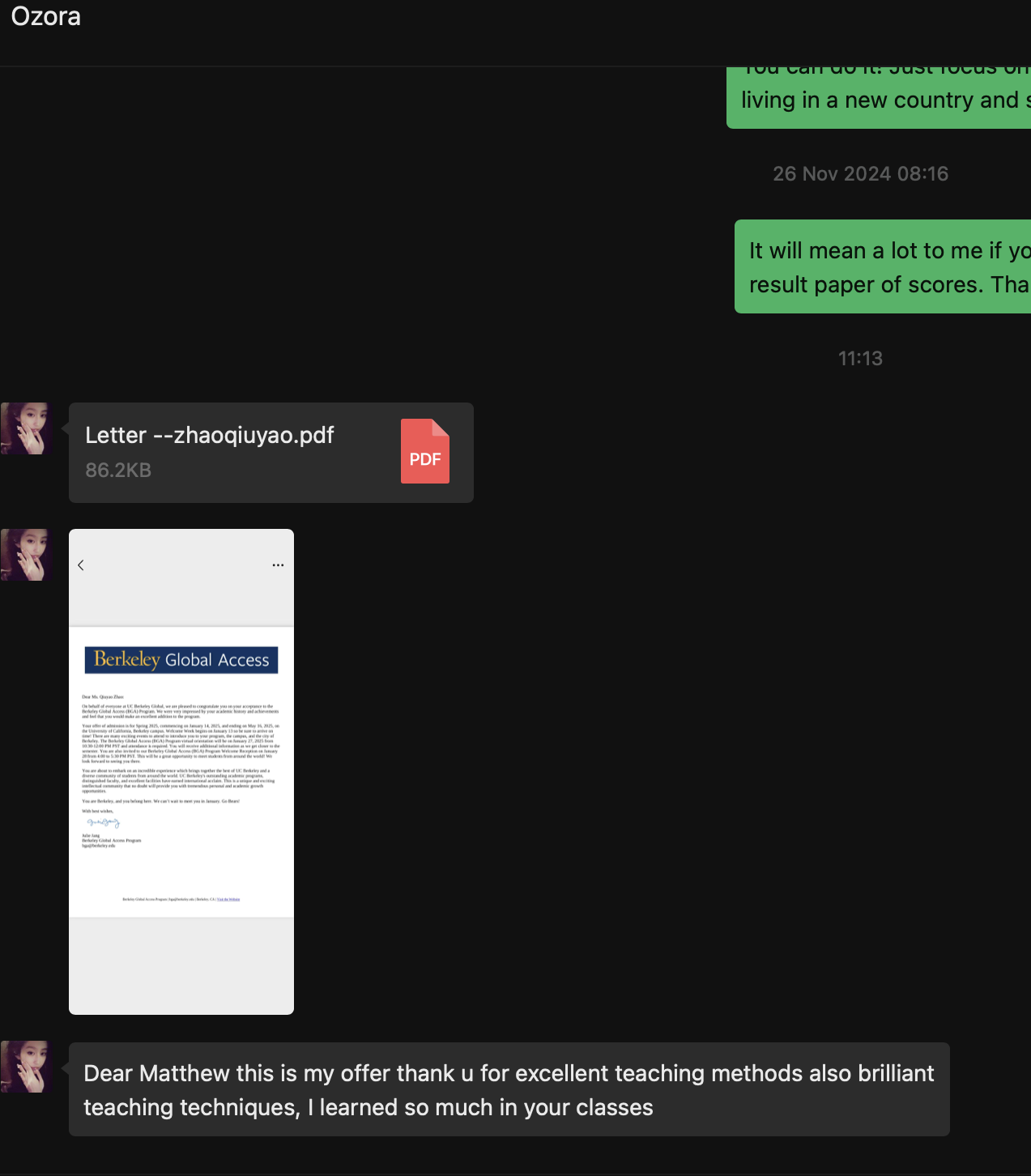
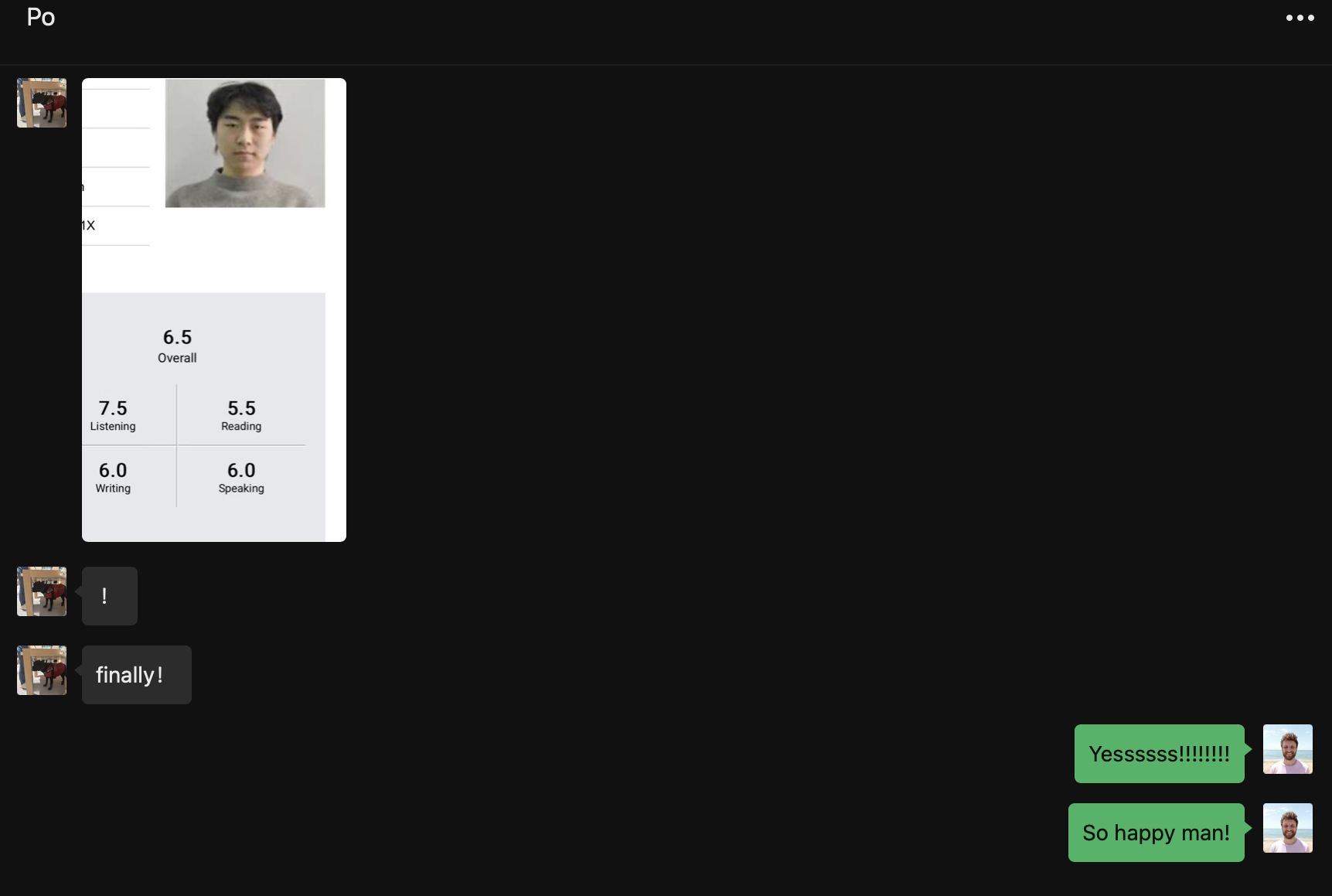
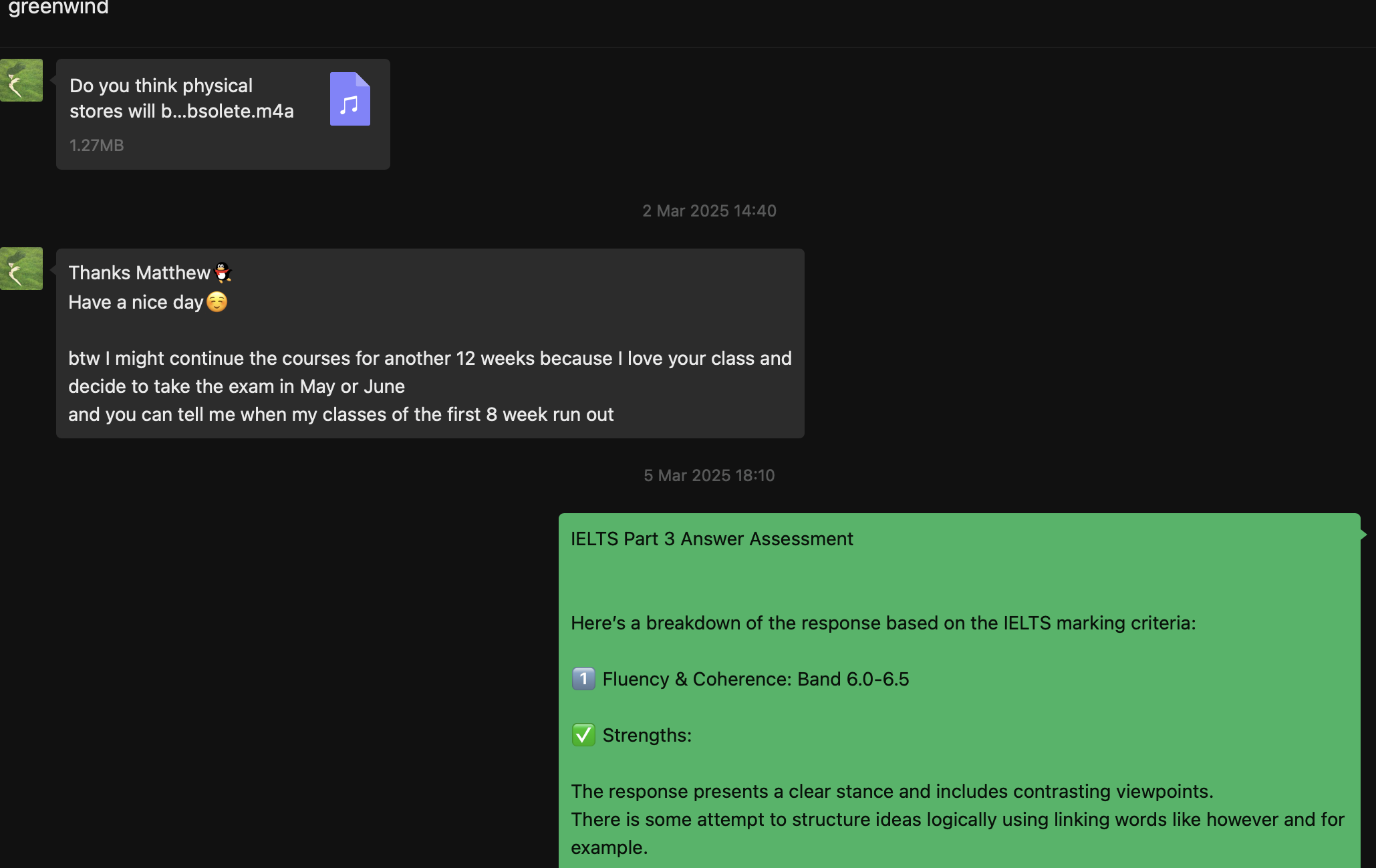
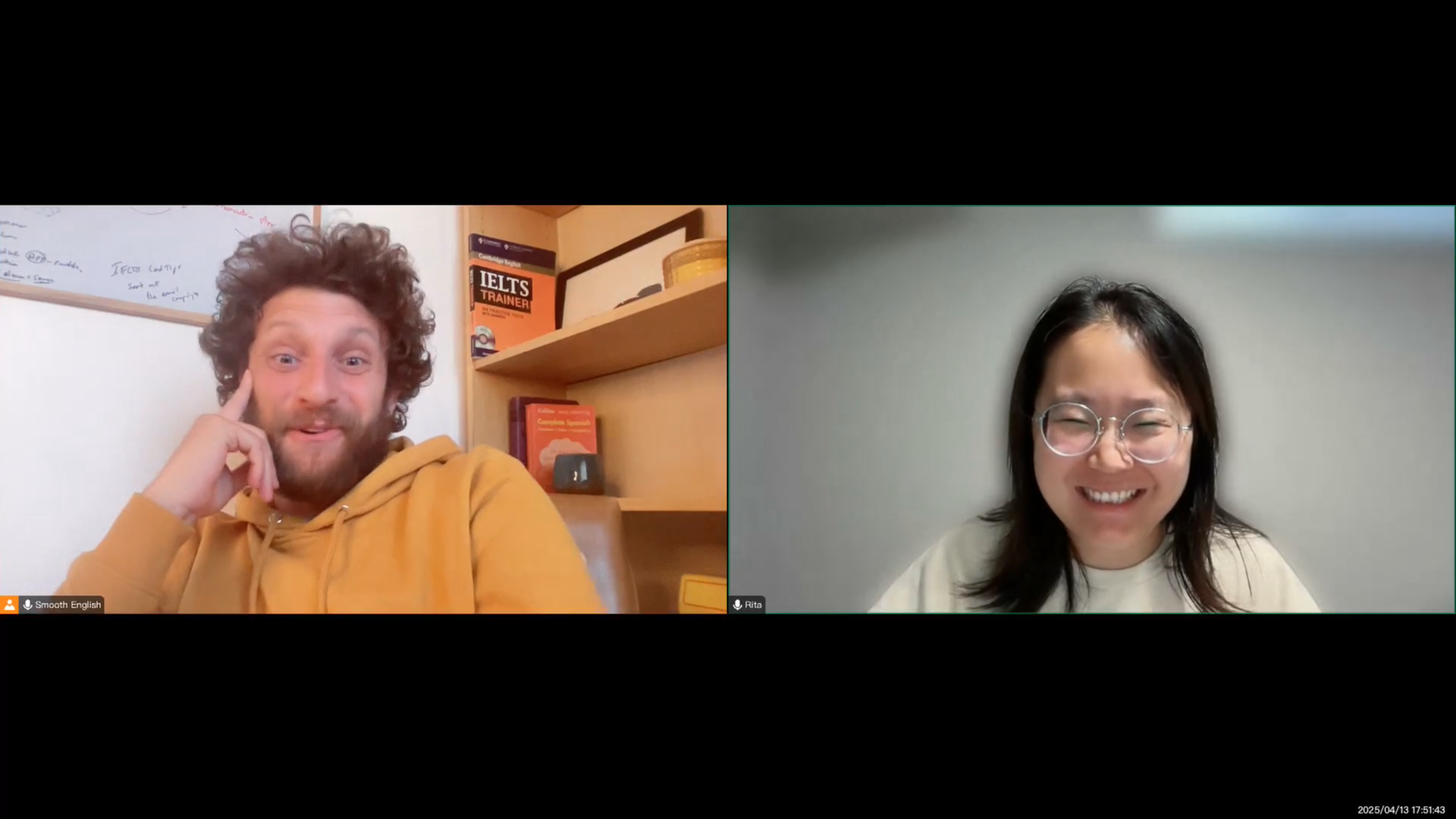
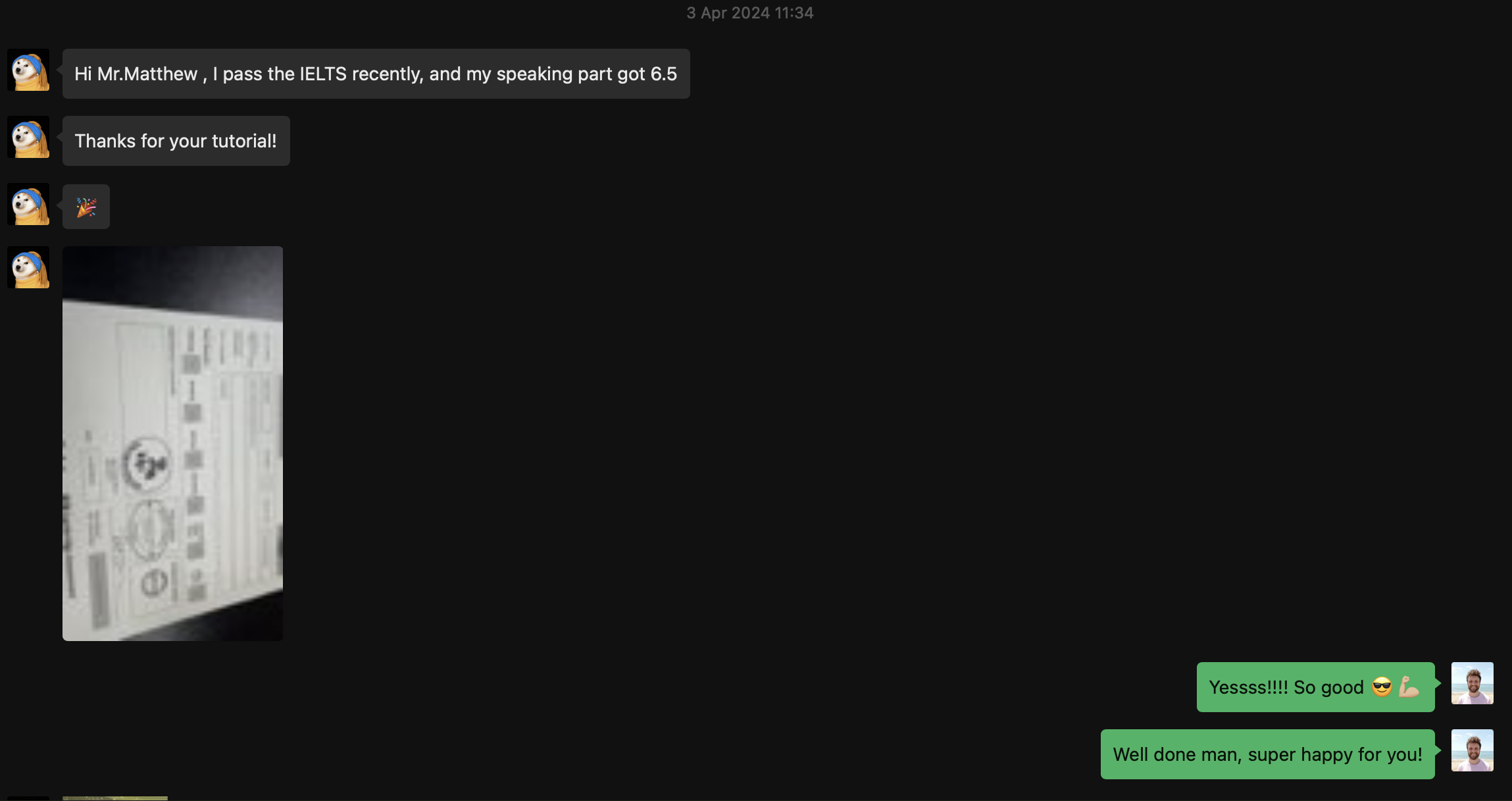
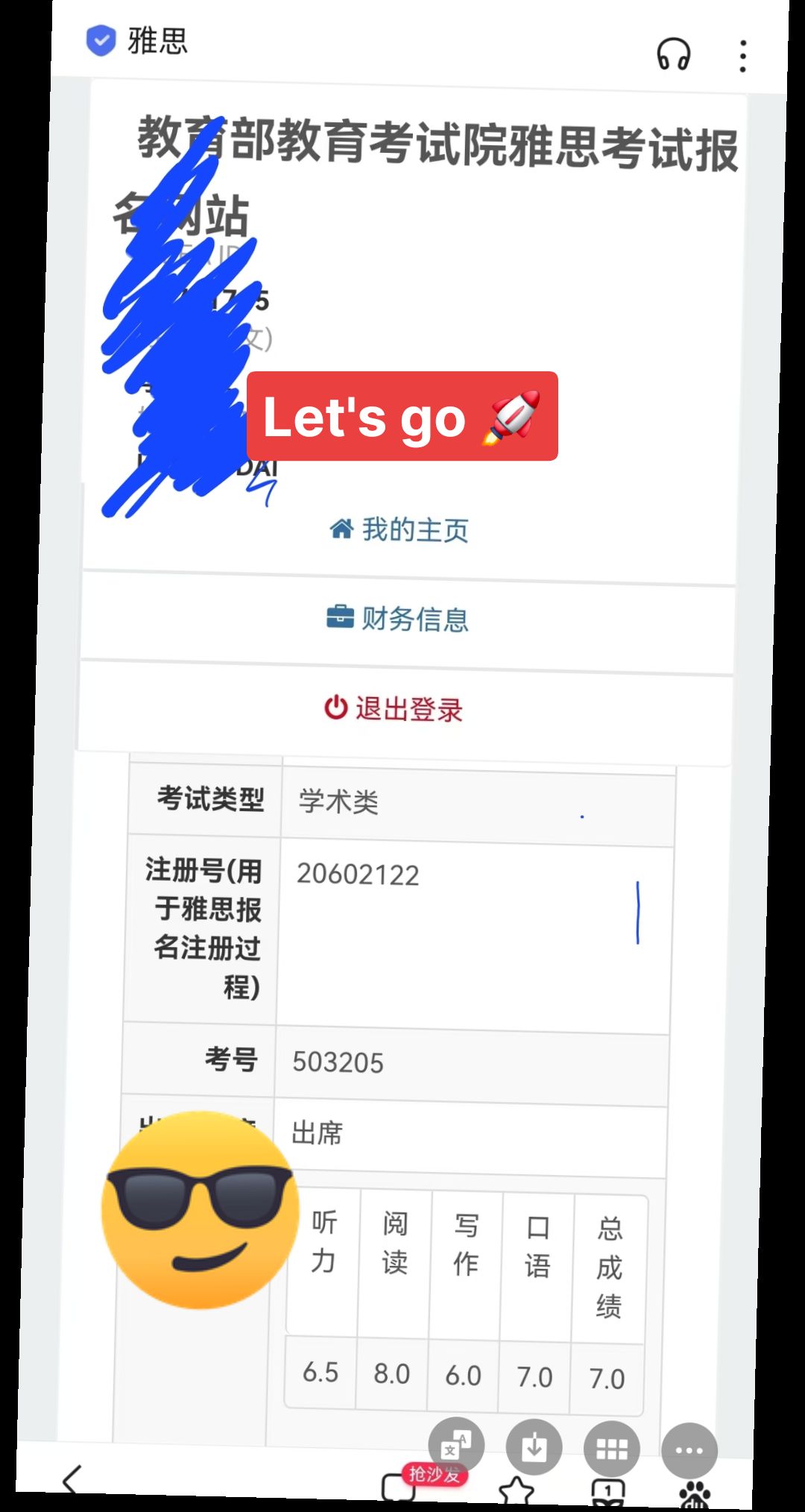
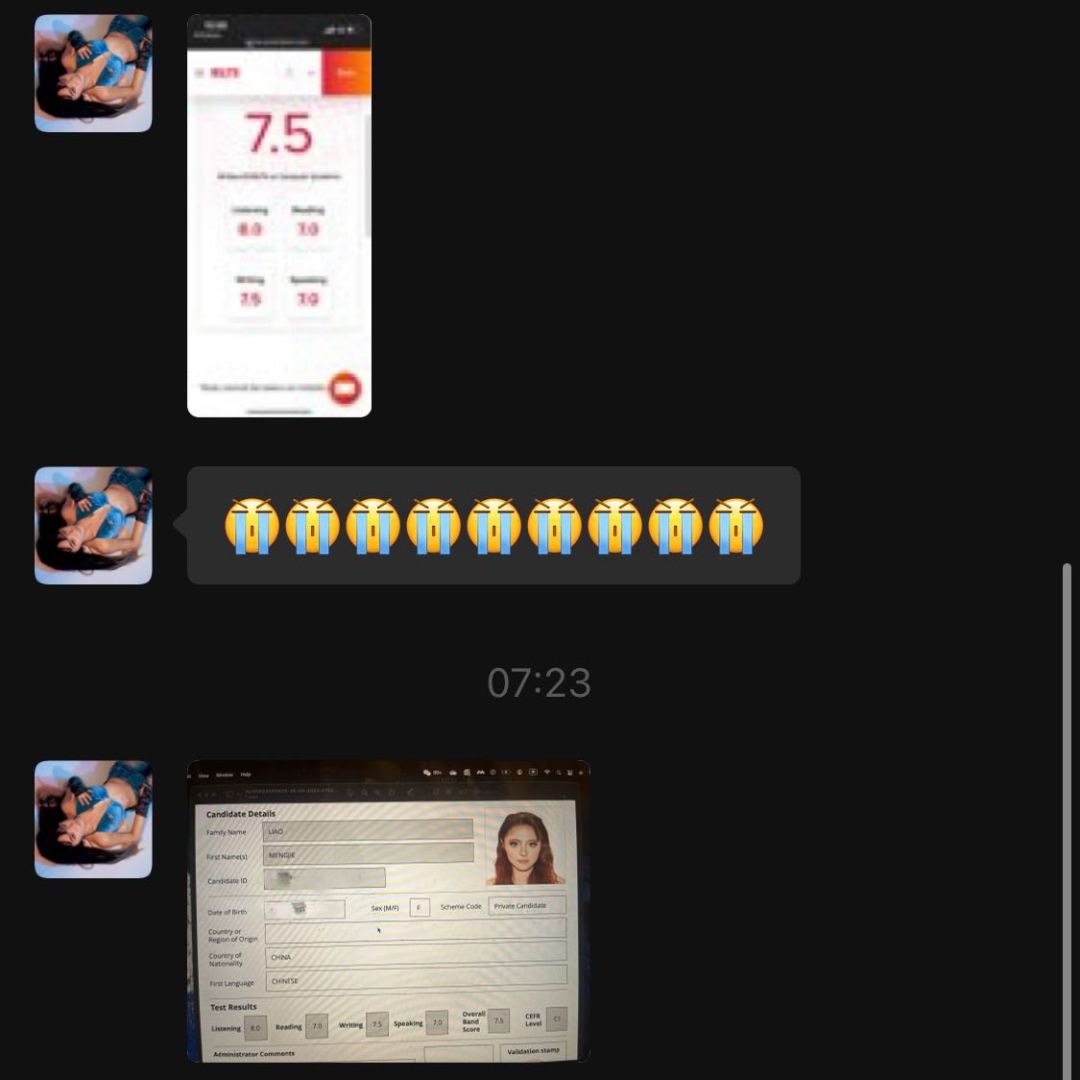
Real students. Real evidence.
The images below are displayed at their natural proportions instead of being cropped, so visitors can actually read the messages and results. Click any image to open the original full-size file.
Score certificates & messages
Full images · click to enlarge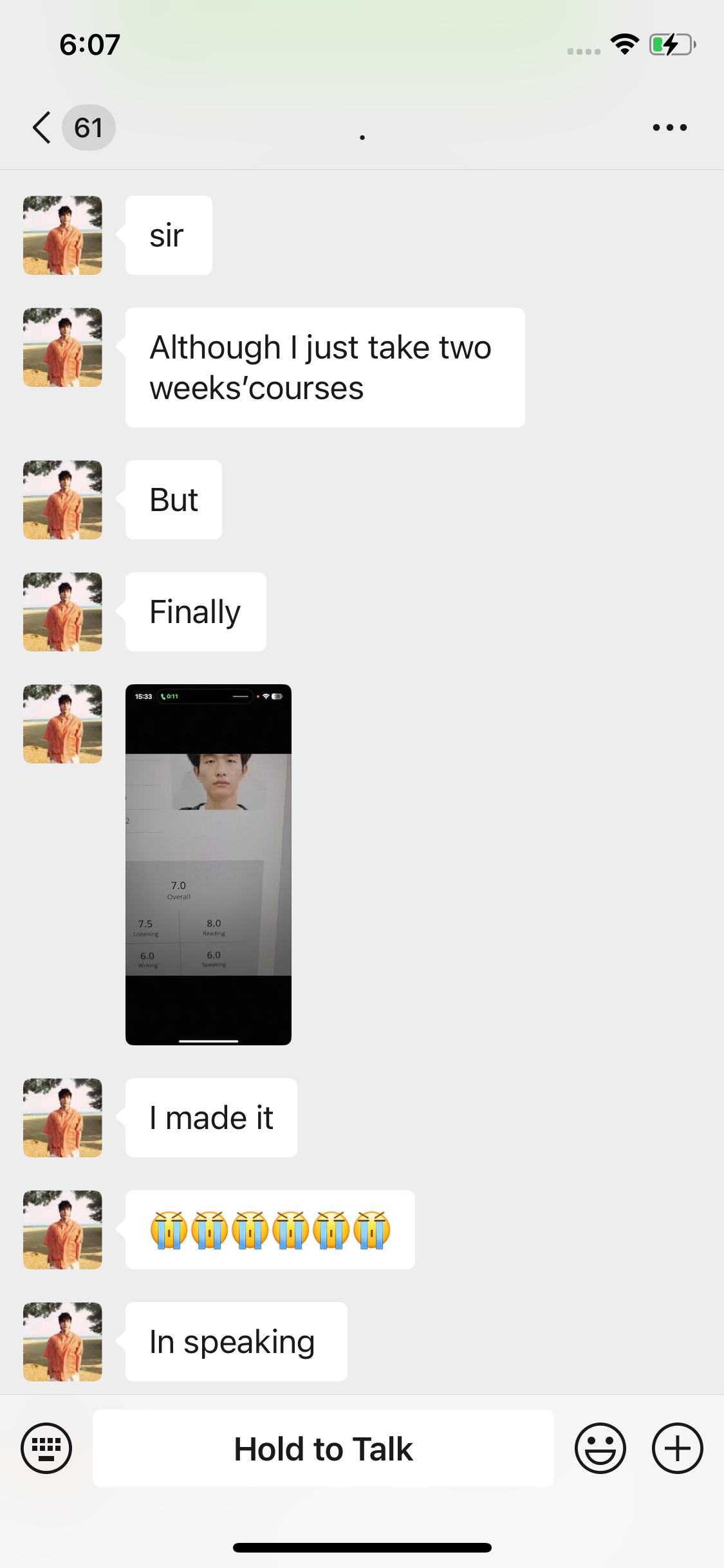
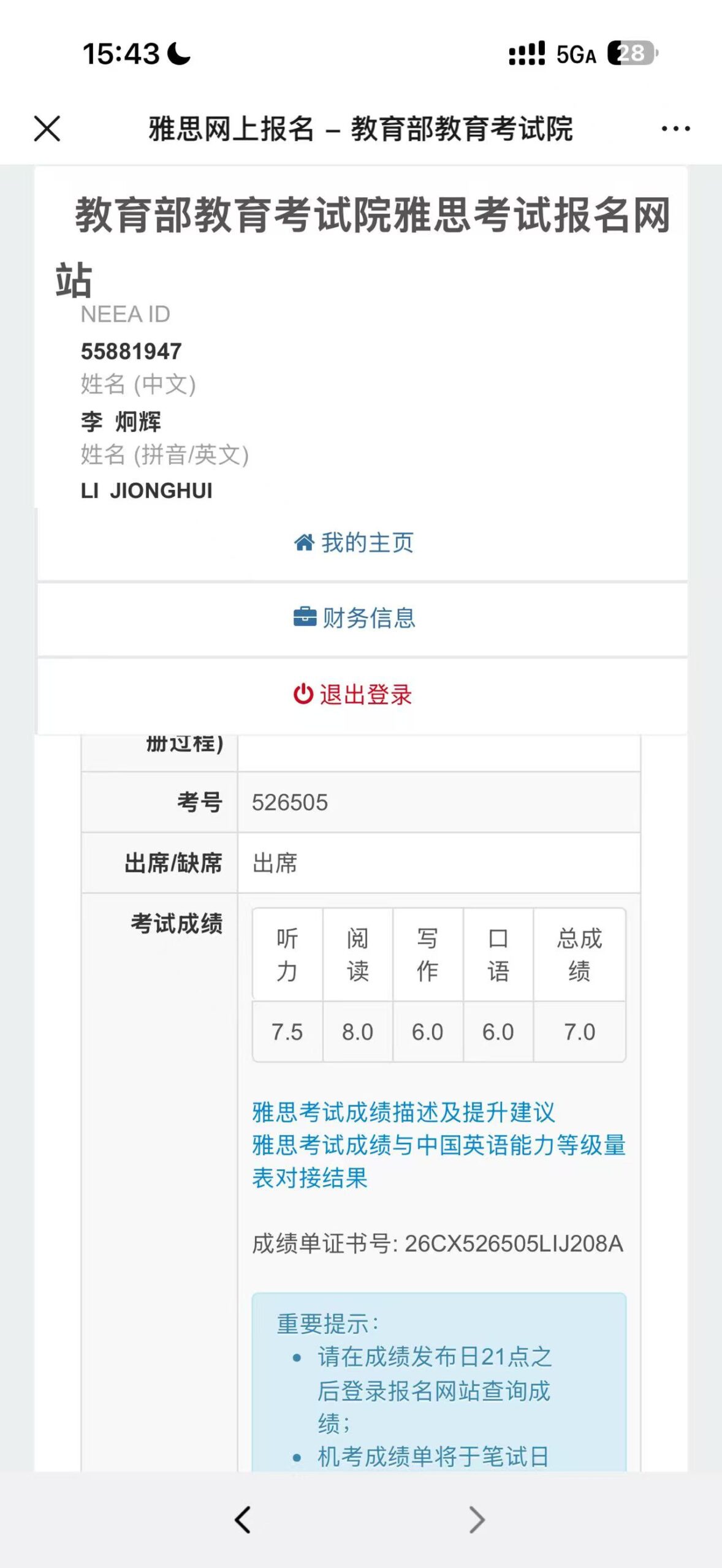

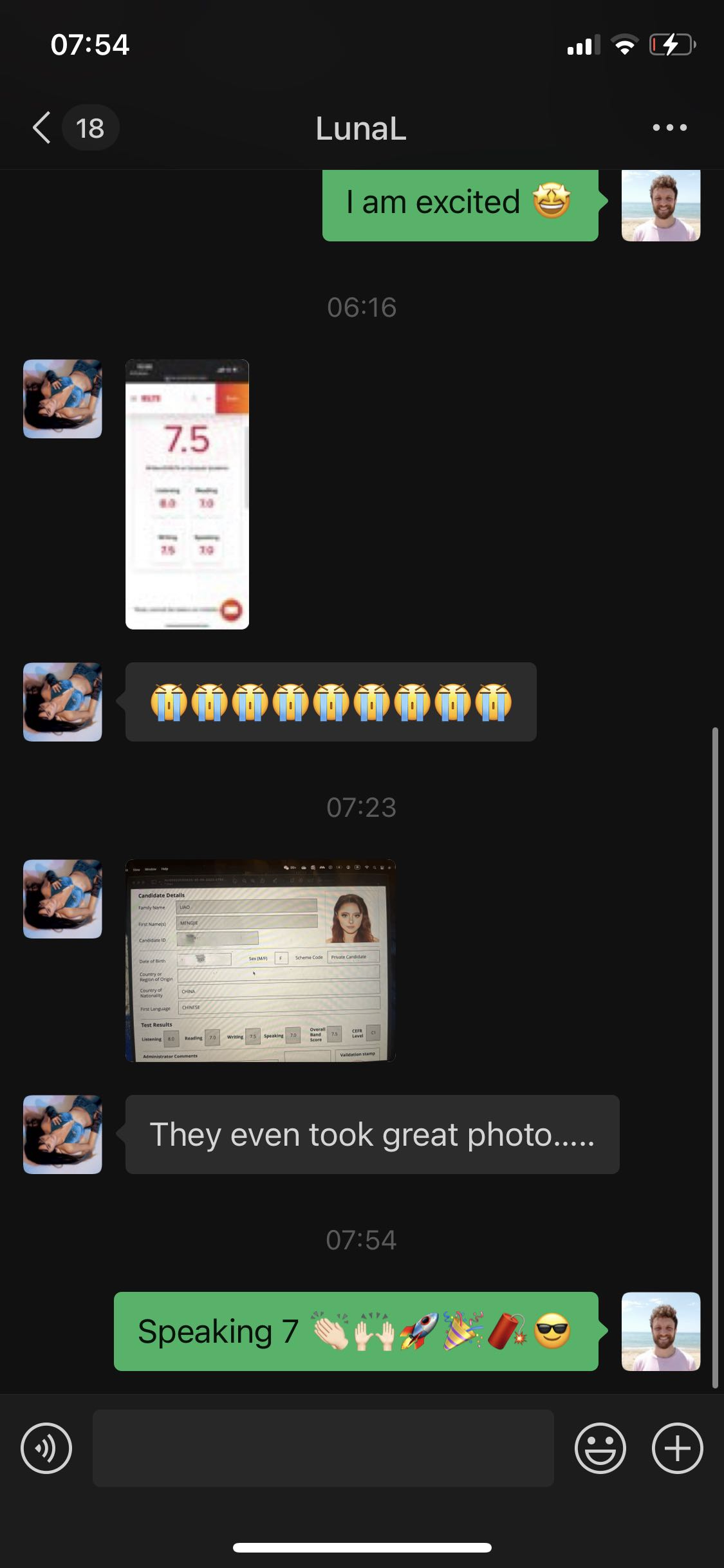
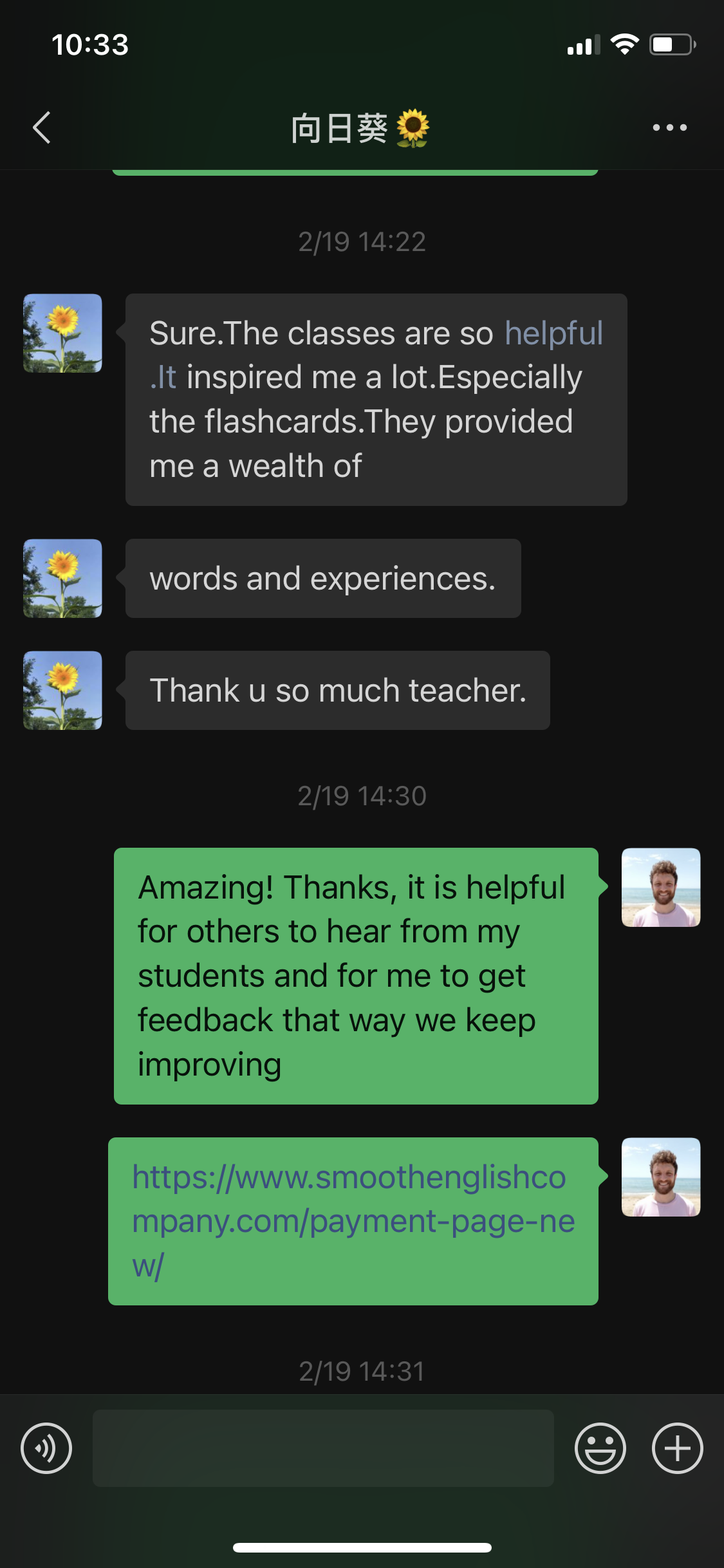
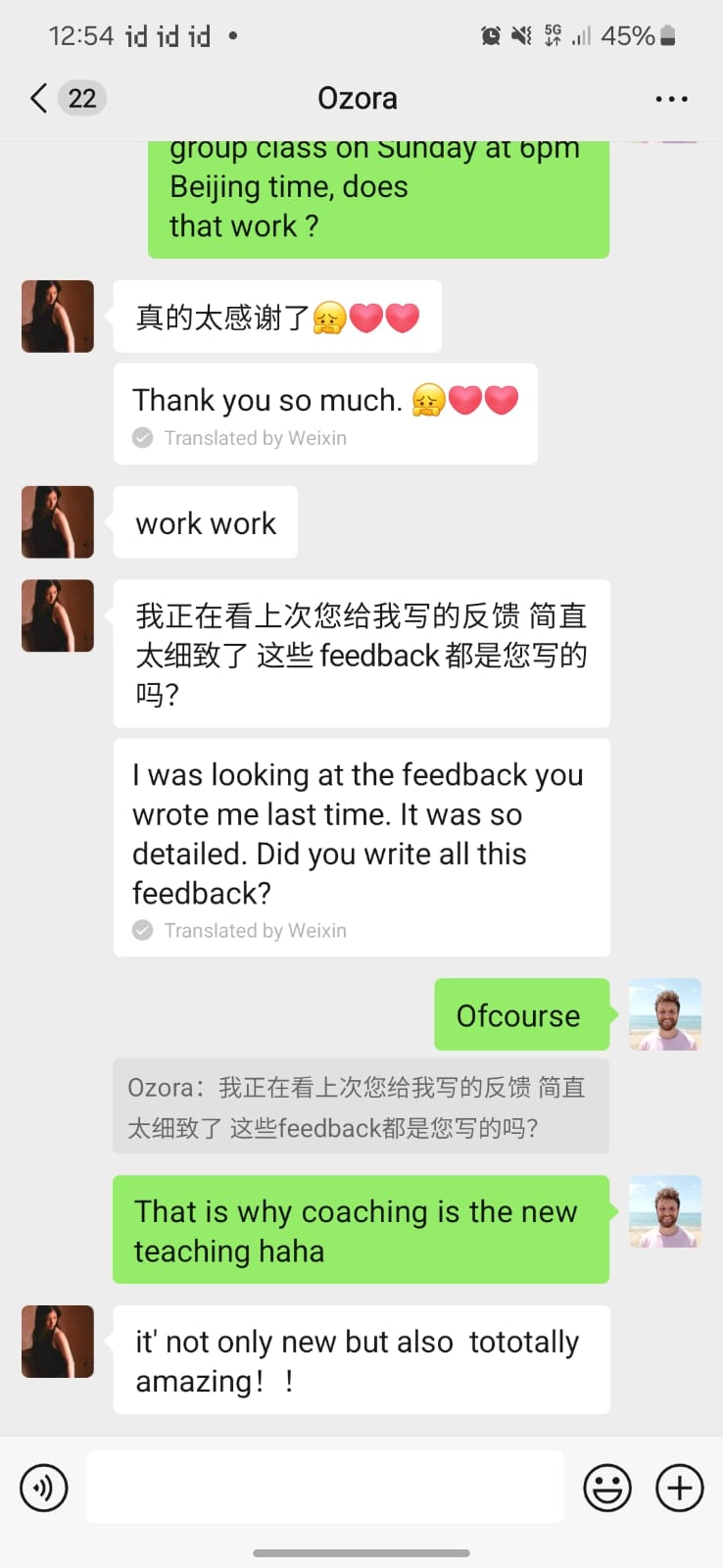
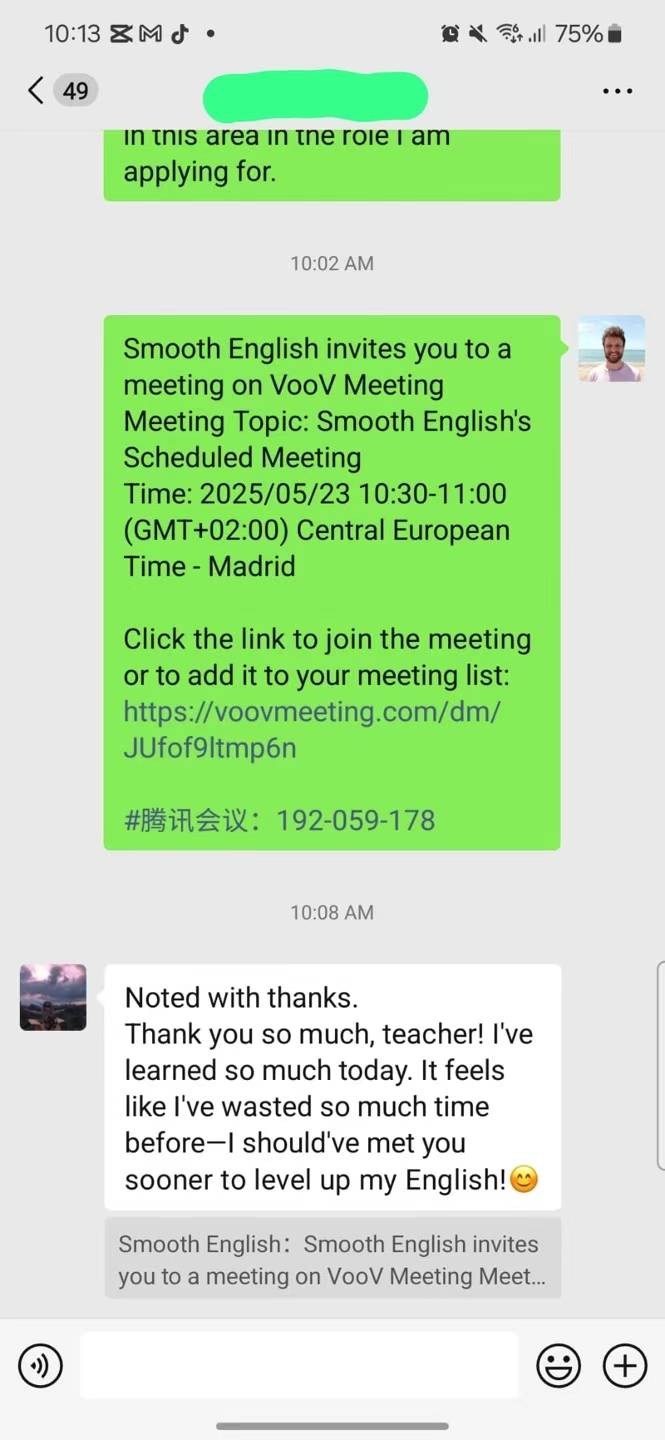
Nothing is cropped: each receipt/result keeps its original height and proportions.
IELTS student results & testimonials
Existing Smooth English evidence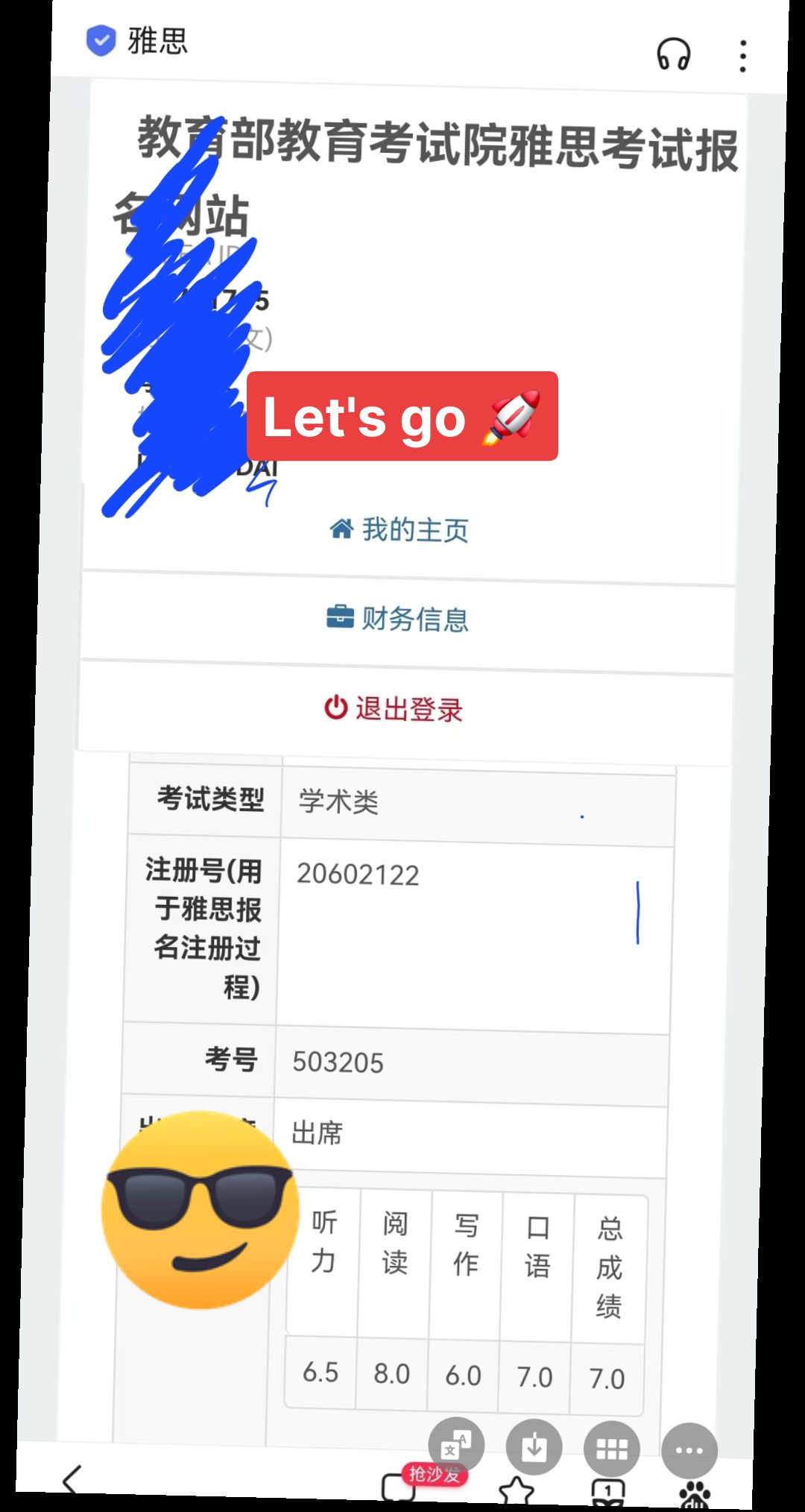


Private 1-to-1 IELTS Coaching
Students who join while this bonus is available also receive a private 1-to-1 IELTS coaching session.
We'll identify your personal priorities for the programme.
- target score
- current performance
- weakest skills
- strongest skills
- exam date
- study schedule
- vocabulary gaps
- recurring mistakes
- confidence
- biggest concerns
Because this requires individual coaching time, only a limited number of these bonus sessions can be offered.
Can you access what you've learned when the pressure increases?
Simply adding more information may not solve the problem. You need to train performance.
More Information
- More lessons
- More vocabulary
- More questions
- More mock tests
The Performance Programme
- Teaching
- Personalised Training
- Recall
- Pressure Training
- Analysis
- Repeat
If you speak well with AI but freeze in front of a person…
If you recognise advanced vocabulary but can't retrieve it…
If you know how IELTS Speaking works but your mind goes blank during Part 3…
If you understand Writing structure but can't organise your essay quickly enough…
If your Reading technique works until the clock starts frightening you…
You need to train performance.
Find Out If You Qualify for the 12-Week IELTS Performance Programme
Train more of the English you already know so it is available when your score actually matters.
You May Know More English Than You Think.
You don't want your best English to appear only when you're comfortable, alone, untimed or speaking to AI. You want more of that English to be available when the examiner is sitting in front of you, the timer is running, you don't know what question is coming next, and your score actually matters.
Diagnose. Train. Recall. Pressure Test. Analyse. Repeat.
Find Out If You Qualify →